What if your voice agent was as good as a human?
The most realistic speech-to-speech voice agent platform. Powered by Phonic’s audio models for natural conversation and frontier intelligence for reliable tool calling.

Hears the audio, not just the text.
Callers talk like they would to a person, because Phonic hears tone and hesitation, not just words.
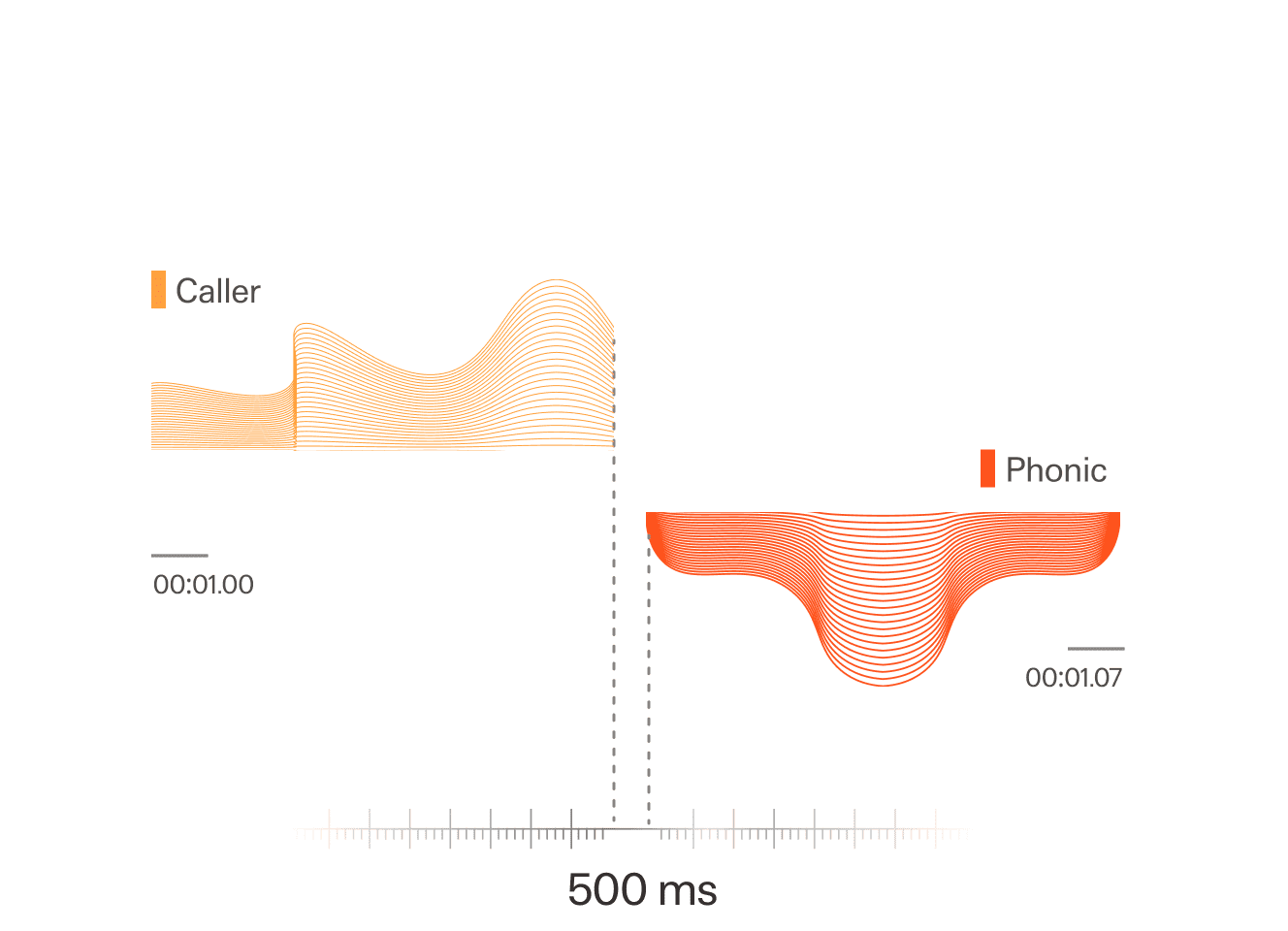
Latency paced like a real call.
Phonic responds in 500 ms while other agents take a full second or more.
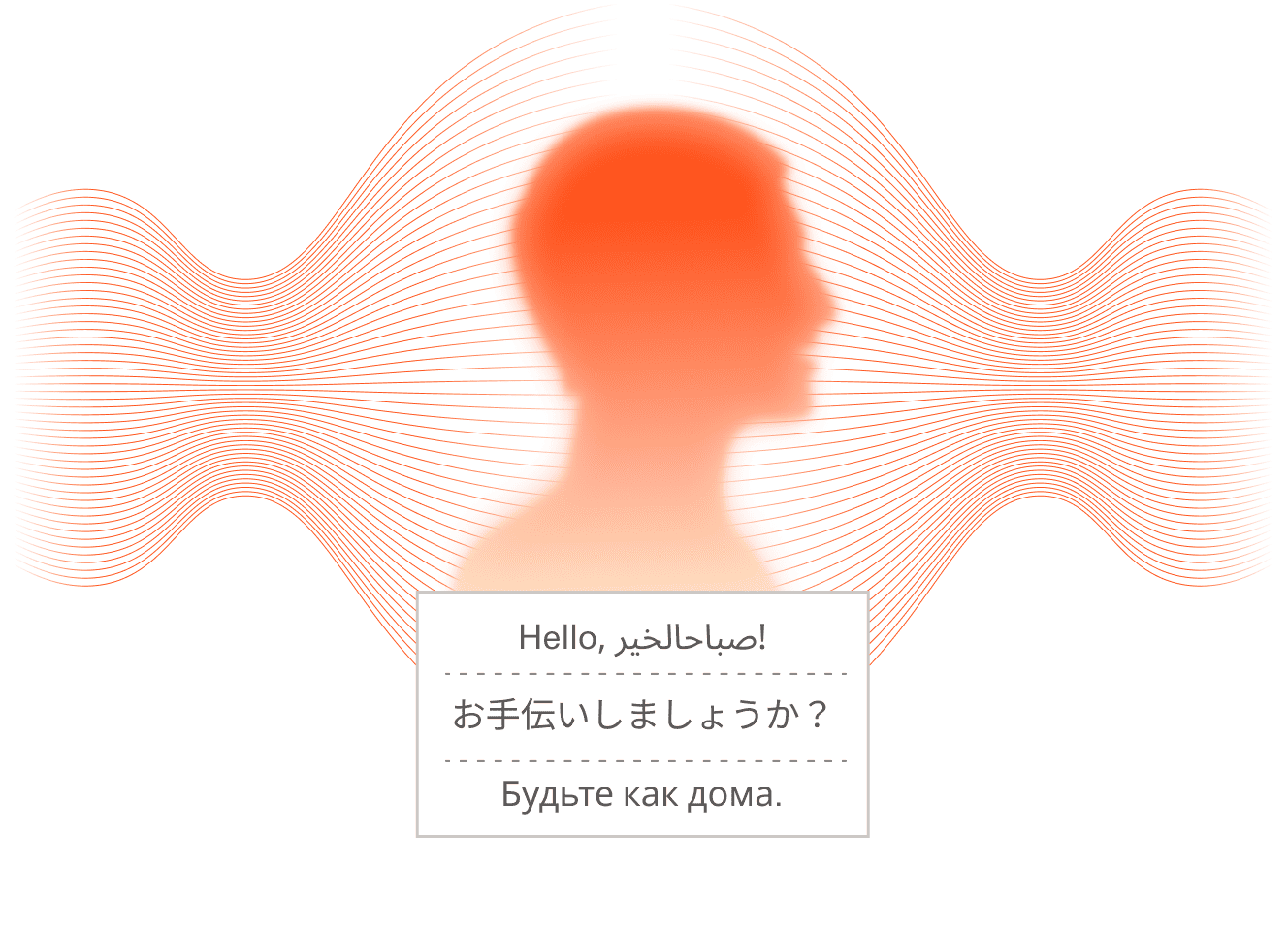
Fluent like a polyglot.
Serve callers in 50+ languages without breaking the voice or the conversation.
Natural speech without sacrificing on intelligence.
Drop into the stack you already run.
Phonic seamlessly plugs into LiveKit, webhooks, or a held-open websocket without rebuilds or refactors. Keep your current infrastructure as it is.
{{system_time}}. To set the timezone per conversation, override system_conversation_timezone in template variables.You are a conversational Example variable here AI voice agent handling live customer support calls for a delivery company. Your goal is to resolve issues clearly while demonstrating empathy, emotional awareness, and calm confidence, especially when the customer is frustrated or stressed. Demonstrate empathy explicitly. Acknowledge the customer's feelings before moving to problem solving. Avoid sounding robotic or rushed. Reassure them that you are here to help.
Build any workflow.
Use one SDK to run voice screening, dispatch coordination, patient intake, or anything else.
Audio-native by default.
Phonic owns the full audio path, routing speech into reasoning so you can build with fewer moving parts.
One contract. One model.
Replace vendor patchwork, multiple SLAs, and latency tradeoffs with one bill, one team, one stack.
Speak firsthand with natural voice agent.
Drop in your number. A Phonic agent will call you in under 30 seconds. Hang up whenever you want.
Your call is starting
We’re calling your number now.
It should ring in the next few seconds.
Fluent like a polyglot.
Phonic is trained on all the languages your customers speak. Since our agents sound like native speakers, callers speak as they normally would on a call.
Production-grade voice. Secured for your team.
Phonic Cloud

Single-tenant

VPC peering

Self-host (Enterprise)
Questions you ask before you sign up.
Can developers customize agent behavior, conversation flow, and post-call data handling?
Yes. Developers can shape how a Phonic agent behaves by configuring the conversation, passing context, and deciding what happens after the call ends.
Common customization points include:
- Agent instructions: define tone, goals, qualification rules, and support boundaries.
- Conversation flow: decide what should happen before, during, and after the voice session.
- Context injection: pass safe metadata such as
userId,accountId, page source, or campaign data. - Post-call handling: send summaries, transcripts, tags, or outcomes to internal systems.
- UI behavior: control launch buttons, consent text, loading states, and completion screens.
For editable marketing pages, let Webflow own the visible copy and placement while the server owns session creation and private integration logic.
How should I secure Phonic API keys in a production implementation?
Store Phonic API keys only in a server-side environment, never in Webflow custom code, inline scripts, or public frontend bundles.
A secure production setup should:
- Keep the permanent API key in environment variables or a secret manager.
- Expose a narrow endpoint such as
/api/phonic/session-token. - Validate allowed origins before issuing browser session data.
- Return only short-lived credentials to the frontend.
- Log failures without exposing secret values.
For general implementation hygiene, the OWASP secrets management guidance is a useful companion reference.
What frontend frameworks can I use with Phonic?
Phonic can be used from most frontend stacks because the browser integration is built around standard web primitives. Teams commonly wire it into Webflow, React, Next.js, or a lightweight vanilla JavaScript embed.
- Webflow: good for marketing pages and designer-owned placement.
- React or Next.js: good for app surfaces with richer state management.
- Plain JavaScript: good for quick embeds and controlled landing pages.
The main requirement is a secure backend path for session creation, plus a frontend surface that can handle microphone permissions and realtime state.
Can Phonic voice agents connect to external tools, webhooks, or internal APIs?
Yes. Phonic agents can be designed to trigger external workflows after or during a conversation, depending on the integration pattern.
Typical developer hooks include:
- Webhooks: send conversation outcomes to a CRM, support desk, or data warehouse.
- Internal APIs: look up account status, product data, or eligibility rules.
- Post-call jobs: summarize transcripts, tag intent, or route follow-up tasks.
For Webflow pages, keep orchestration behind a server endpoint rather than embedding private service credentials in the page.
How does Phonic handle real-time audio streaming in the browser?
Phonic can be implemented as a realtime browser experience: the page captures microphone input, streams audio to the conversation service, and renders agent responses back to the user.
A developer-friendly implementation usually includes:
- Browser permission handling for
getUserMedia. - A realtime transport such as WebSocket or WebRTC, depending on the integration.
- UI states for connecting, listening, speaking, muted, and ended.
- Fallback messaging when microphone access is blocked.
Keep the realtime connection details short-lived and request them only when the user starts a conversation.
Can I pass custom metadata, user IDs, or context into a Phonic conversation?
Yes. Pass lightweight metadata at conversation start so downstream systems can connect the conversation to the right user, account, page, or campaign.
Common metadata fields include:
userIdor anonymous visitor IDaccountIdor workspace IDsourcePage, campaign, or experiment variant- Any non-sensitive context the agent should use during the session
Do not send passwords, payment data, secrets, or regulated personal data unless the integration has been reviewed for that use case.
For browser-friendly payloads, keep metadata as simple JSON primitives. The MDN JSON guide is a useful reference for the format.
Does Phonic provide an API for generating session tokens or launching conversations?
Yes. In a production setup, the browser should not call Phonic with a permanent secret. Instead, create a small server endpoint that exchanges a protected API key for a short-lived browser session.
- Server side: store the API key as an environment variable or managed secret.
- Client side: request a temporary session token before opening the voice connection.
- Webflow: call only the safe public endpoint, never the secret provider directly.
Example flow: POST /api/phonic/session-token returns the data the frontend needs to launch the conversation. Link this answer to Phonic docs or onboarding materials when the final developer guide is ready.
How do I embed a Phonic voice agent into a Webflow or custom website?
Embed Phonic as a client-side voice experience while keeping sensitive setup on the server. A typical Webflow implementation uses a Code Component or embed for the UI, then calls a backend endpoint to mint a short-lived session token.
- Add the Phonic component or embed to the page.
- Request a session token from a server route such as
/api/phonic/session-token. - Start the browser conversation with the returned realtime connection details.
For the product surface, start at phonic.co. Keep API keys out of Webflow custom code and browser JavaScript.