Our goal is simple.
Talking with a Phonic agent should feel like you’re talking to a human.

Speaking with agents should be delightful.
Throughout history, we've found ways to extend ourselves into the world, so we can show up in places we can't be in person. The Yellow Pages put the local business in every home. A website gave a single store a national presence. An Instagram profile introduced us before we said hello.
Much of life takes place in our interactions with these extensions, and when those are frustrating, everyone's day gets a little worse: an appointment you can't book, a payment that doesn't go through, a friend's big news you never saw.
Now, the world is building the most powerful extension of ourselves yet: agents. Soon, every business, product, and person will have agents that represent them in the world, and we'll speak with them.
If those conversations are delightful — the kind that make you feel heard, not handled — everyday life gets a little lighter. Our mission is to make speaking with agents delightful.
This delight lives in the details: the warmth in a voice, the timing of a reply, the judgment behind an answer. Catching these details requires a speech-to-speech model that hears and speaks natively. We're obsessed with building the best one.
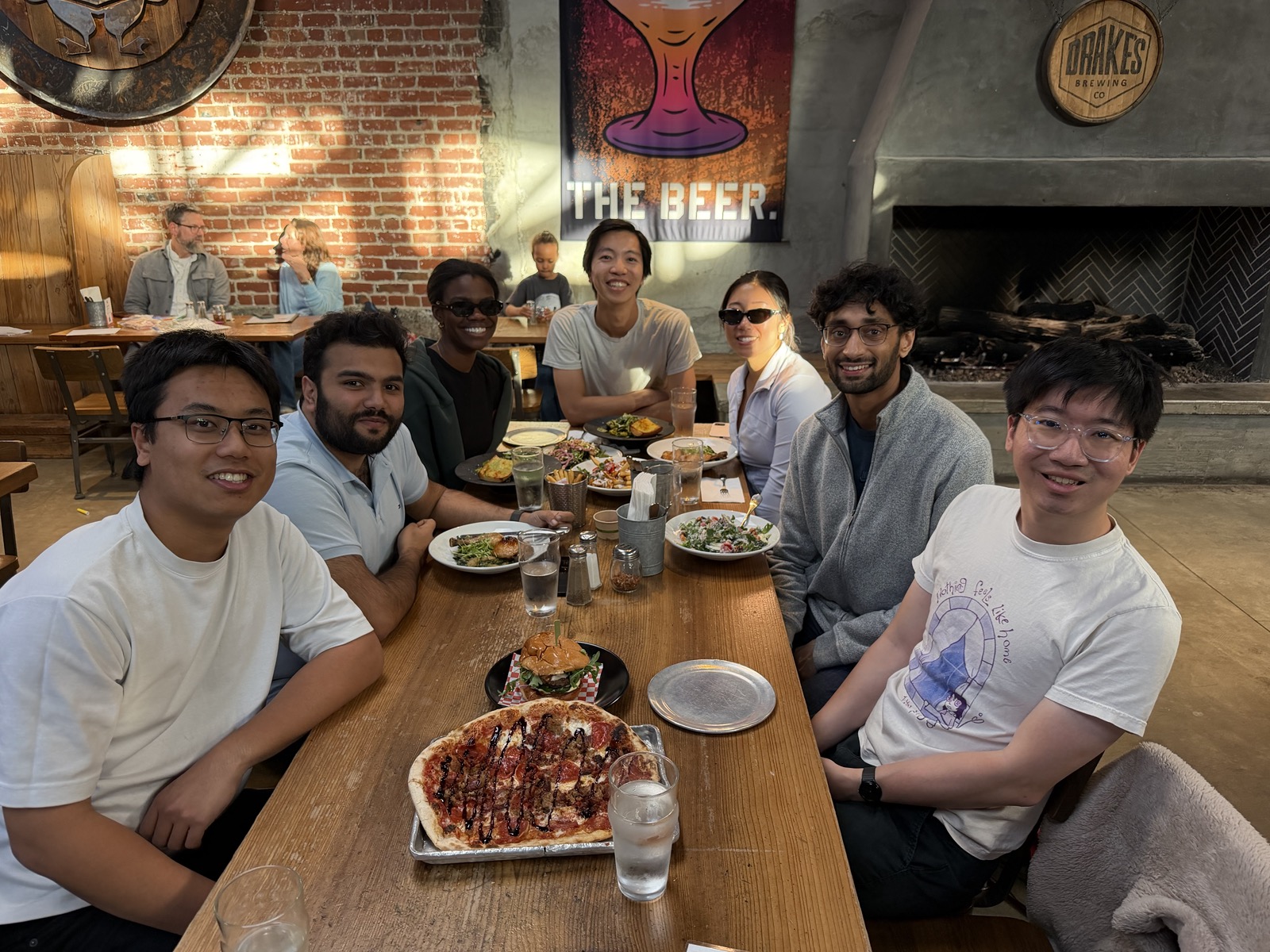
Meet our researchers and engineers
Phonic's researchers and engineers work on the entire stack: pre-training from scratch, mid-training, post-training, optimizing inference, and forward deploying with our customers to ensure they're successful.



Training audio models
Our researchers work across the full training lifecycle: from pre-training on petabytes of data, to mid-training for conversational intelligence, to post-training for naturalness, instruction following, and reliable behavior.
Optimizing inference
Our inference engineers write custom kernels, optimize latency, and eliminate cold starts so customers can run voice AI at scale.
Highly reliable infrastructure
Uptime is table stakes. We build for 99.99% uptime that is resilient to bursty, scaling traffic, without sacrificing cost efficiency.
Forward deployed engineering
We forward deploy into our customers' offices and work alongside them to ensure a successful deployment.

Moin Nadeem
A generative AI and machine learning researcher with over 2,400 citations, Moin was the 8th employee at MosaicML, which was acquired by Databricks for $1bn. He holds a Bachelor's and Master's degree in Computer Science from MIT.

Nikhil Murthy
Nikhil previously worked at NVIDIA, Intel, and Genesis Therapeutics, where he led the foundation model team and trained state-of-the-art models for structure prediction. He earned his Bachelor's and Master's degrees in Engineering and Computer Science from MIT in 2.5 years.
Our investors